
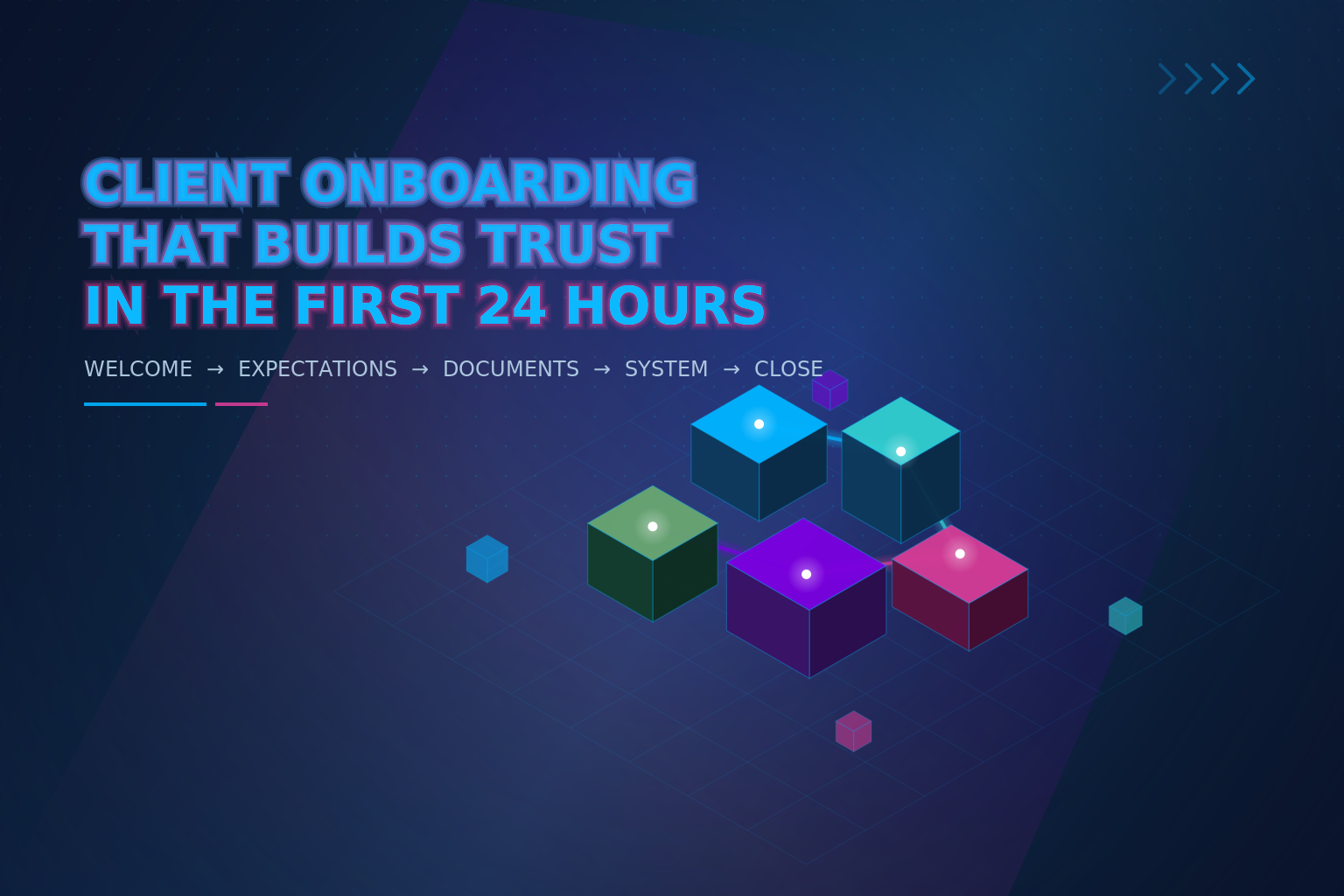
Most agents spend months perfecting their prospecting scripts and almost no time on what happens the moment a lead says yes. That gap shows up later as a client who feels confused about the timeline, texts you three times asking what happens next, or quietly starts wondering if they picked the wrong agent. A real estate client onboarding process fixes that, and it does it in the first 24 to 48 hours, long before the first showing or the first offer.
Client onboarding is not a courtesy. It is the mechanism that converts a signed buyer agreement or listing agreement into an actual working relationship built on clear expectations. Agents who treat it as an afterthought end up re-explaining the same process to every client individually, which burns hours that a repeatable system would save.
Why the first 24 hours decide how the whole transaction feels
New clients are anxious by default. They just made a big decision, and now they are wondering whether they made the right one. NAR’s 2025 Profile of Home Buyers and Sellers found that nearly 40% of agents report buyers experience the homebuying process as harder than they expected, and 76% of first-time buyers said their agent was the one who helped them actually understand what was happening. That is the entire value of onboarding in one stat: clients do not just want a home, they want someone to translate the process for them from day one.
What happens when onboarding is skipped
Without a defined onboarding step, agents default to answering questions as they come up, which means clients learn the process reactively instead of proactively. That creates the exact behavior agents complain about most: constant check-in texts, confusion about who handles what, and a client who feels like they are chasing information instead of receiving it. A short, structured onboarding sequence eliminates almost all of that friction before it starts.
What actually belongs in a real estate client onboarding process
A working onboarding sequence does not need to be complicated. It needs to happen the same way, every time, regardless of how busy you are that week.
The welcome message
Send a welcome email or text within an hour of signing, not the next morning. Confirm you received the signed agreement, thank the client, and tell them exactly what happens next and when. This single message prevents the “did that actually go through?” text that shows up 18 hours later.
The expectation-setting conversation
Within a day or two, have a short call or meeting that covers the full timeline, how you communicate (text, call, email, and how fast you respond to each), what the client needs to do on their end, and what a normal week in this process looks like. Most client anxiety comes from not knowing what is coming next, not from the process itself being difficult.
The document and systems handoff
Send the welcome packet: preferred lender contacts, inspector and contractor recommendations if relevant, a copy of signed agreements, and access to whatever portal or shared folder you use to track the deal. Process Street’s real estate client onboarding checklist is a useful reference if you want a full template to build from rather than starting blank.
- Confirm receipt of signed agreements within one hour
- Schedule the expectation-setting call within 48 hours
- Send the welcome packet with vendor contacts and next steps
- Set the communication cadence and stick to it for the full transaction
Automating the repetitive parts without losing the personal touch
The mistake agents make once they realize onboarding matters is trying to personalize every single message from scratch, every single time. That does not scale past a handful of clients a month. The fix is templating the parts that do not change (the welcome message, the document checklist, the timeline overview) while keeping the actual conversation personal.
This is exactly the gap PULSEIntel PRO was built to close. Instead of manually tracking who got which message and when, the platform automates the onboarding sequence and follow-up cadence so nothing falls through when your pipeline gets busy. If you are closing enough deals that onboarding has started to feel like the thing you never quite get to, PULSEIntel PRO handles the repetitive parts so your time goes toward the client conversations that actually need you.
It also connects directly to the follow-up problem most agents do not realize is costing them referrals. A client who was onboarded well but then goes quiet for three weeks mid-transaction forgets that good first impression fast. Pairing a strong onboarding sequence with AI-powered follow-up that runs automatically keeps that same clarity going for the entire transaction, not just the first week.
Where onboarding actually breaks down
The most common failure point is not a missing welcome email. It is inconsistency. An agent onboards their first three clients of the month with real care, then the fourth and fifth get a rushed text because a listing appointment ran long. Clients compare notes more than agents assume, especially in tight-knit communities, and an inconsistent experience undercuts referrals just as much as a bad one does.
The second common failure is treating onboarding as a one-time event instead of the opening move in ongoing communication. A strong onboarding sequence sets the tone, but it only works if the cadence it promises actually continues through closing. That consistency is the same discipline covered in transaction management automation, where missed deadlines and dropped communication usually trace back to a process that was never standardized in the first place.
Build it once, run it every time
Watch the video below for a look at how a first-time buyer call actually plays out, including the kind of expectation-setting language that makes a strong onboarding conversation work in real time.
Real estate client onboarding is not about impressing anyone with a fancy welcome packet. It is about removing the guesswork that makes new clients anxious and makes your own week harder to manage. Build the sequence once: the welcome message, the expectation call, the document handoff, the communication cadence, and run it the same way for every single client. The agents who close consistently are usually the ones whose clients never have to wonder what happens next.
