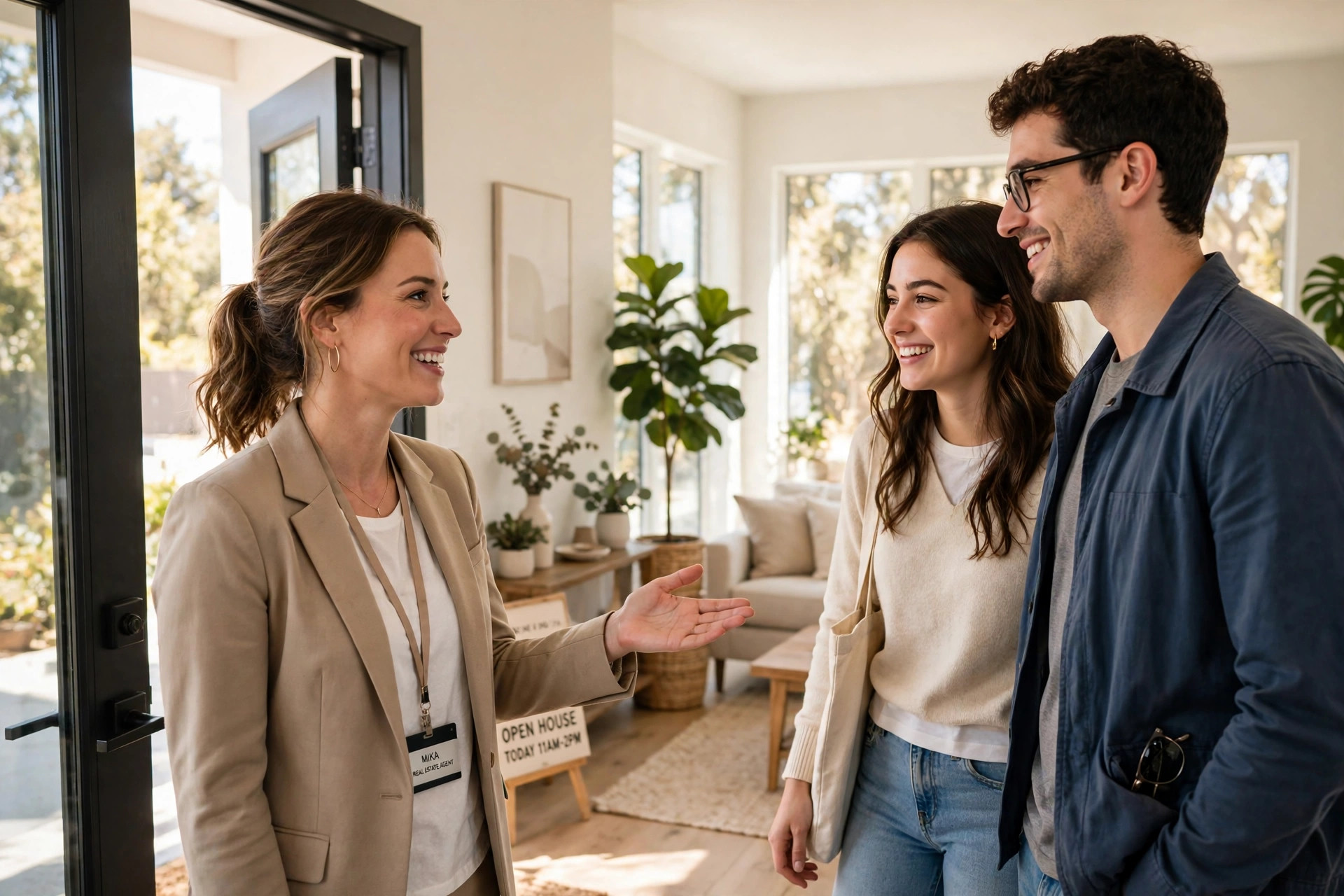
Half the buyers in America walk through an open house during their search.
The National Association of REALTORS 2025 Profile of Home Buyers and Sellers found that 48 percent of buyers used open houses as an information source. Forty-three percent called them very useful. And 59 percent of homes sold were marketed with an open house.
So the traffic is real. The buyers are there. They are serious, they are in person, and they are looking.
Then why do most agents leave with nothing but a sign-in sheet full of fake phone numbers?
Because most agents run the open house like a showing. They stand by the door, smile, hand out a flyer, and hope someone asks for help. Hope is not a system. And in a market where existing home sales just fell to their slowest pace since 2010, hope is the most expensive strategy you can run.
Stop Measuring the Open House by Whether the House Sells
Only 5 percent of buyers found the home they purchased through a yard sign or an open house sign. Fifty-two percent found it on the internet. Twenty-seven percent found it through their agent.
Read those numbers again. If you judge your open house by whether someone buys that house, you will call almost every open house a failure. That is the wrong scoreboard.
Here is the number that matters. Five percent of buyers found their agent by visiting an open house. That sounds small until you do the math. In a market where 88 percent of buyers purchase through an agent, every person who walks through that door is a buyer who needs representation. Most of them do not have an agent yet, or they have one they barely know. The open house is your interview, and you are the only candidate in the room.
The Real Product Is the Conversation
Most agents greet visitors with the same line. “Hi, welcome in, feel free to look around.”
That sentence kills the conversation before it starts. It tells the visitor you are furniture.
Try this instead. When someone walks in, give them one useful fact they cannot get from the listing. “This kitchen was redone last year, and the neighborhood has three homes under contract right now.”
Now you are the person who knows things.
Then ask one question that opens a door. “Are you looking in this area, or just getting a feel for the market?” It is simple. It is not pushy. And it tells you in five seconds whether you are talking to a buyer, a neighbor, or a looker. All three matter, but they need different conversations.
The neighbor is your next listing. The looker is your next buyer in six months. The buyer is your client this week.
Pick the Right House and the Right Hours
Not every listing deserves an open house. A house on a dead-end street with no parking and a one hour window on a Tuesday will not draw a crowd. A well-priced home in a neighborhood people already drive through on Sundays will.
Run your open houses on Saturday and Sunday, late morning to mid-afternoon. That is when buyers are out. Put signs at every turn from the main road, not just at the corner. Put out ten. Signs are cheap. Empty rooms are expensive.
And promote it like it matters. Post it on your social channels the day before and the morning of. Text your database. Tell the neighbors with a door knock or a flyer the day before. Neighbors show up, and neighbors sell houses.
The Sign-In That Actually Works
Everyone hates the sign-in sheet. Visitors hate it because it feels like a trap. Agents hate it because half the numbers are fake.
The problem is not the sheet. The problem is how you ask. Let them walk in and see the house first. Then, when you are already talking, say this: “I send everyone a quick note with the comparable sales for this street, so you can see what homes are actually selling for around here. What is the best number to send it to?”
Now the sign-in has a reason. You are not collecting data. You are delivering something useful.
The Tour That Turns Visitors Into Clients
Do not follow people room to room. Nobody wants a shadow. Let them move through the house at their own pace, then catch them at the natural pause points, the kitchen and the primary bedroom.
At the kitchen, talk about the neighborhood, not the countertops. Countertops they can see. What they cannot see is that the elementary school two blocks over is one of the top rated in the district.
At the primary bedroom, ask the question that finds the real buyer. “What would have to be true for this to be the one?” Their answer tells you their budget, their timeline, and their objections in one sentence. Write it down.
The Follow Up That Closes the Loop
The open house does not end when you lock the door. It ends when the follow up is done, and most agents never do it.
Text every visitor the same evening. Not a mass message. A personal one, with the detail you wrote down. “Great meeting you today. Here are three homes in your price range. The one on Elm has the home office you mentioned.”
Then call the next day. Not to sell. To ask one question. “Did anything stand out to you from the homes I sent?” That call separates the curious from the serious, and it takes ninety seconds. The first ten days after you meet someone decide whether they remember you or forget you, and a real follow up plan is what makes those ten days count.
Turn One Open House Into Next Week’s Listing Appointment
Every open house should produce three things. A buyer conversation. A neighbor conversation. And a listing appointment.
The neighbors who walk through are not being nosy. They are doing research. Their home is their biggest asset, and they want to know what it is worth. When you talk to a neighbor, ask this: “Have you ever wondered what your place would sell for in this market?” Then offer to run the numbers. No pressure. Just the answer they already want.
The listing system is not complicated. One signed listing creates the open house, the open house creates the neighbor conversation, and the neighbor conversation creates the next signed listing. Most agents break the chain at step two because they never ask the neighbor the question.
And every contact you make goes into your database the same day. Not next week. Your weekly database routine is what turns a Saturday afternoon into closings six months from now.
Run It Like a System, Not a Saturday
The open house is not a showing. It is a client acquisition event with a front door.
Pick the right house. Promote it like it matters. Open with information, not a greeting. Ask one good question. Follow up the same night. Call the next day. Ask every neighbor what their home is worth.
Ten visitors a weekend is forty conversations a month. If one in ten becomes a client, that is four clients a month from a strategy most agents treat as a chore.
The buyers are already walking through the door. The only question is whether you have a system waiting for them when they do.
Want the full system behind this? Get your free copy of the book at pwru.app/freerealestatebook and start with the 20 contacts you already have.
Sources
National Association of REALTORS, 2025 Profile of Home Buyers and Sellers: 48 percent of buyers used open houses as an information source; 43 percent rated them very useful; 5 percent of buyers found their agent by visiting an open house; 52 percent found the home they purchased on the internet; 27 percent through an agent; 59 percent of homes sold were marketed with an open house; 88 percent of buyers purchased through an agent. NAR highlights and NAR news release.
National Association of REALTORS, October 2026 existing home sales: 3.75 million seasonally adjusted annual rate, slowest pace since August 2010 (as reported in the November 20, 2026 PWRU post).
